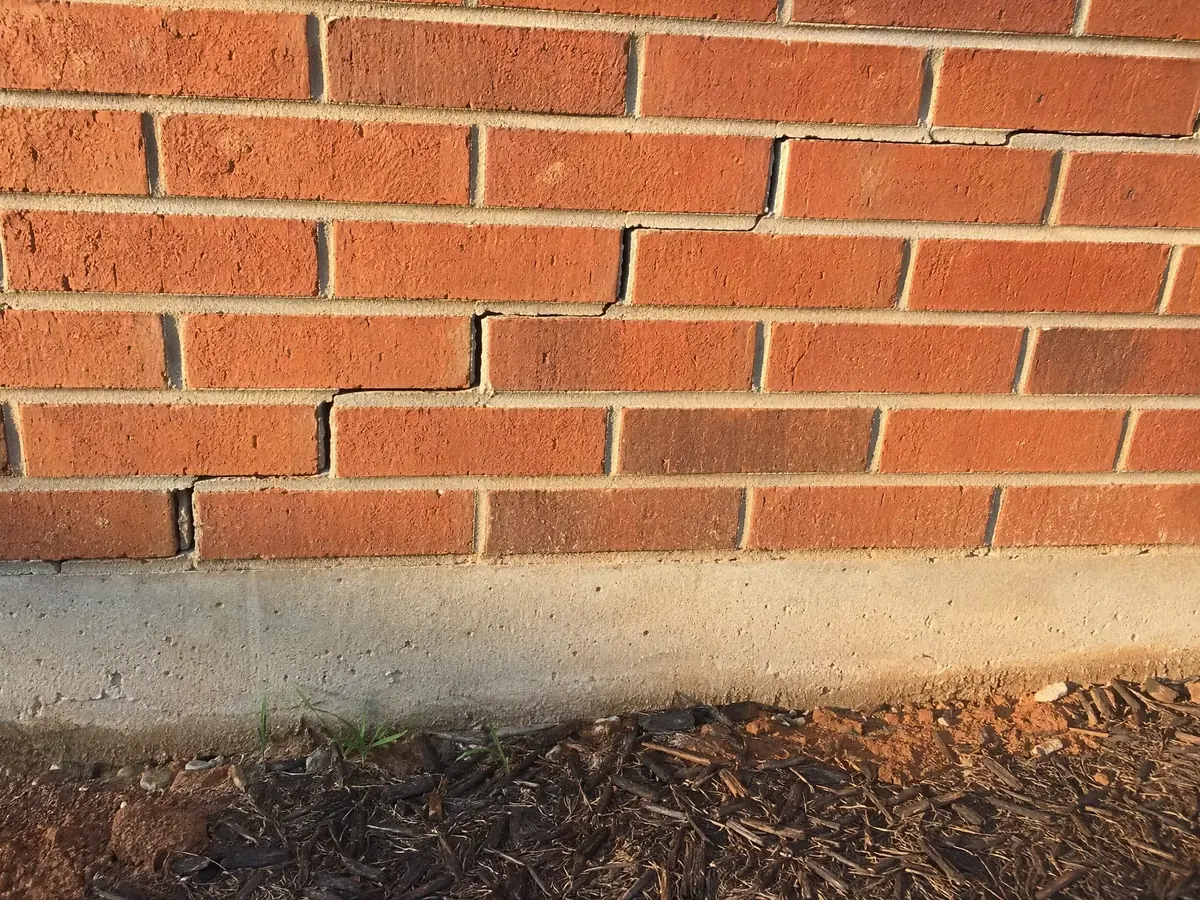
Not every crack is a problem
Concrete shrinks as it cures. Almost every slab and poured wall develops small cracks in its first year or two, and most of them never matter. Brick veneer cracks a little as a house settles in. Drywall cracks at corners of doors and windows as the framing dries. If a crack is hairline, has not grown, and both sides are level with each other, it is usually cosmetic.
Cracks worth a closer look
- Wider than about a quarter inch
- Wider at one end than the other, which suggests one side is moving
- One side higher than the other, so you can feel a lip
- Horizontal cracks in a block or basement wall
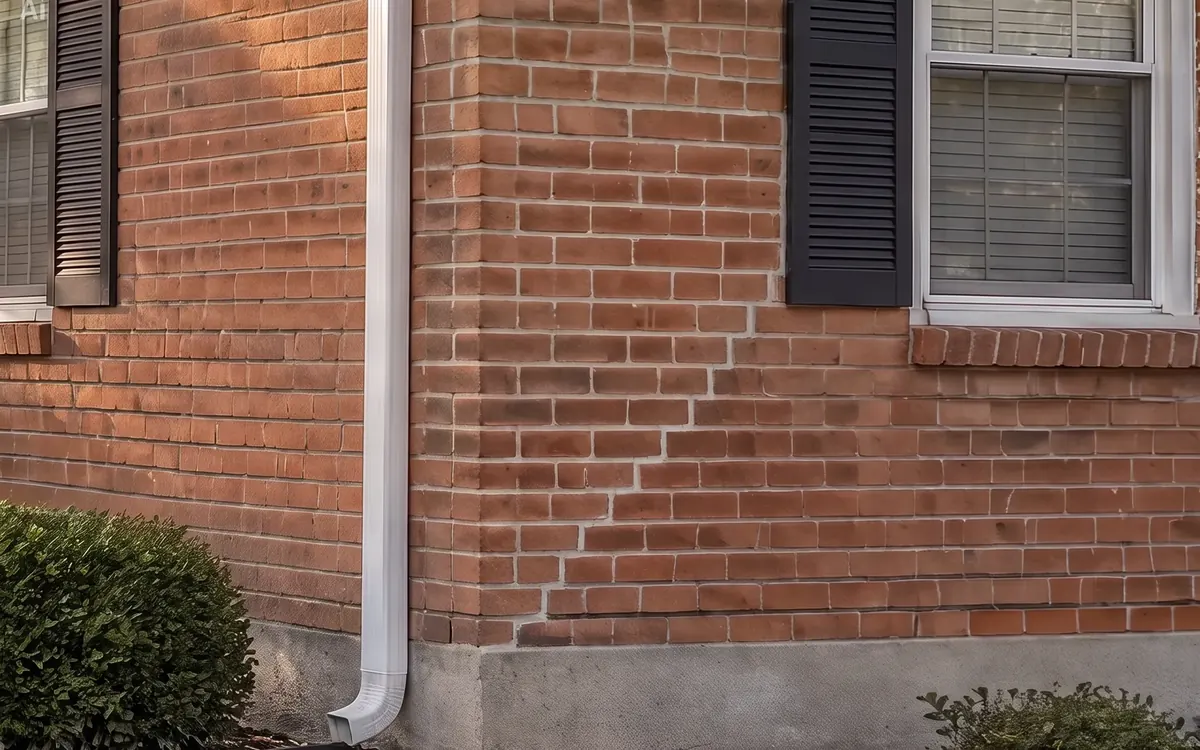
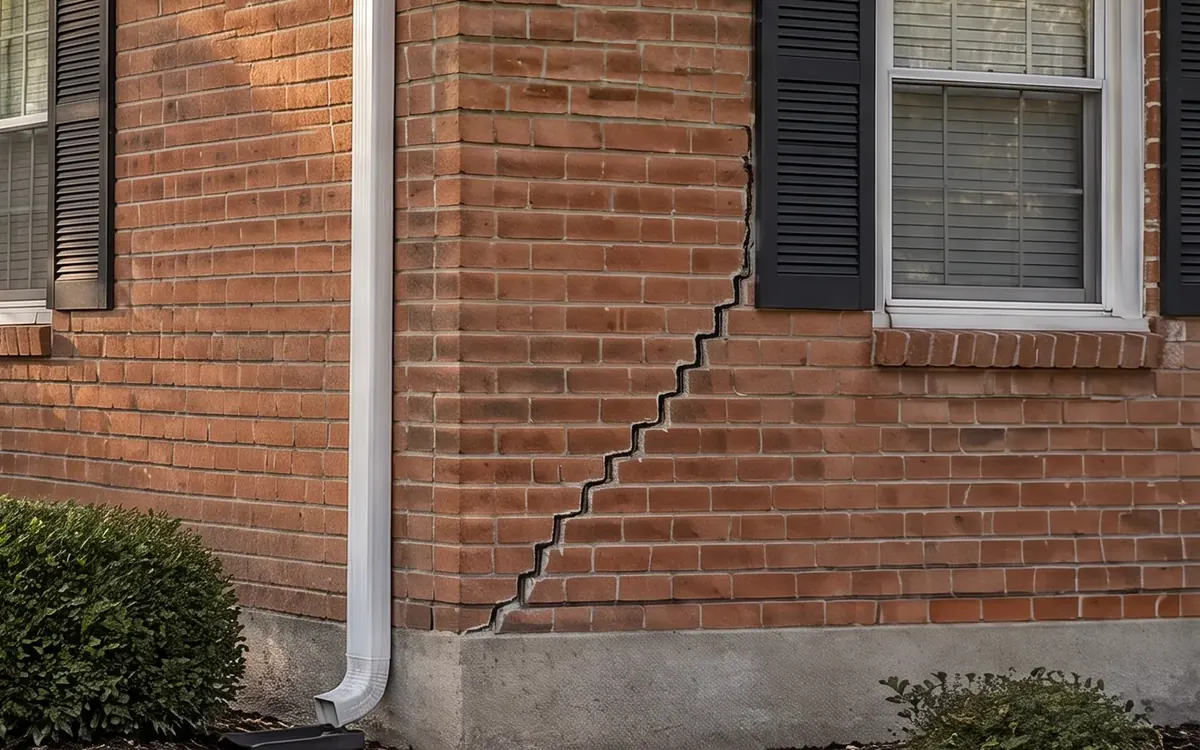
- Stair-step cracks through brick or block mortar
- Cracks that have grown since you first noticed them
- Cracks that leak water after rain
Any of these can point to foundation movement rather than simple shrinkage. A contractor or engineer can tell the difference by measuring floor elevations and looking at the pattern of cracks across the whole house.
How to monitor a crack yourself
Before calling anyone, you can learn a lot with a pencil and a phone. Mark each end of the crack with a short line and the date. Take a photo with a ruler or coin next to it. Check it every month or two, especially after a very wet or very dry stretch. Around Murfreesboro, clay soil moves with the seasons, so a crack that opens in late summer and closes in winter tells a different story than one that only grows. Inexpensive plastic crack monitors from a hardware store make this more precise.
Repair methods
Epoxy injection
For a crack in a poured concrete wall that needs a structural repair, epoxy is injected through small ports along the crack. It bonds the concrete back together and can be stronger than the concrete around it. It works best on cracks that are not still moving.
Polyurethane injection
Polyurethane foam is injected the same way, but it stays slightly flexible and expands to fill the crack. It is mainly used to stop water from coming through, not to restore strength. It is the usual choice for a leaking basement crack.
Masonry repair
Stair-step cracks in brick or block are repaired by grinding out and repointing the mortar, sometimes with stitching bars set into the joints. Repointing only lasts if the movement that caused the crack has stopped.
Slab crack filling
Cracks in slabs, garage floors and patios can be filled with a flexible sealant or a cementitious filler. That keeps out water and debris. It does not change anything underneath the slab.
Crack repair is often the last step
If a crack comes from active settling, filling it is like painting over a water stain. The crack will reopen. The order that usually makes sense is: find the cause, fix the support with piers, leveling or wall repair, handle the water, and then repair the cracks.
Check whether the crack is still moving
Before anyone injects a crack, find out whether it is still growing. Mark both ends with a pencil and write the date next to each mark, then look again in a few weeks. A crack that keeps getting longer or wider points to settling or soil movement, and sealing it will not stop that.
What crack repair costs
Crack repair is one of the cheaper foundation repairs. Angi's 2026 national range for foundation cracks is $250 to $800. It lists epoxy at about $8 to $12 per square foot and sealant at $1.25 to $4 per linear foot (Angi, 2026). Costs rise if the crack is hard to reach, has to be excavated from outside, or is part of a larger structural repair.
Rutherford County is one of nine Tennessee counties that adopted the state home improvement law. Here, a contractor doing a residential job worth $3,000 to $24,999 needs a home improvement license and a $10,000 surety bond, according to the Tennessee Board for Licensing Contractors. Jobs of $25,000 or more need a full state contractor license anywhere in Tennessee. You can look up any license at verify.tn.gov.